The game
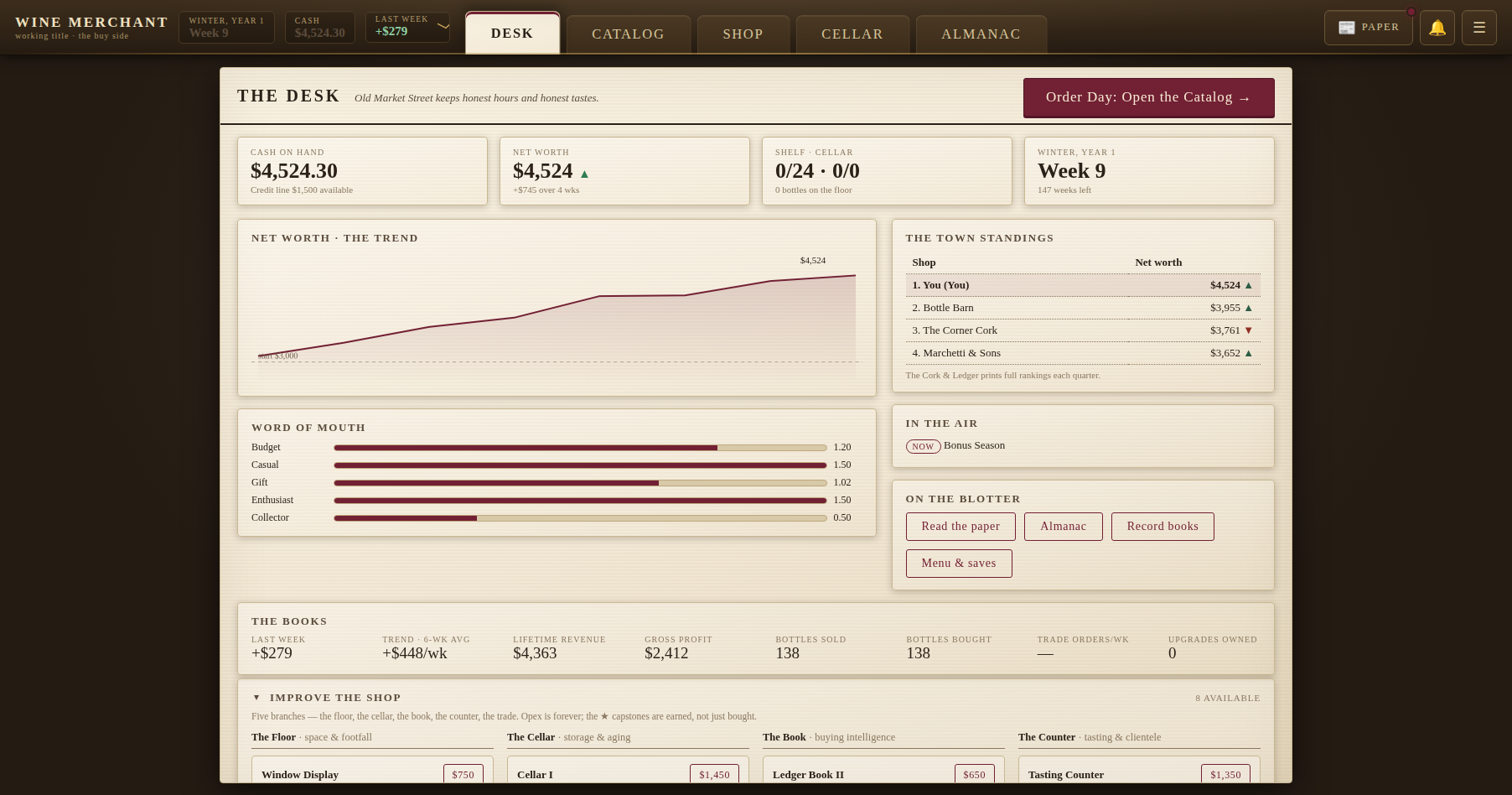
Every Monday the catalog lands: growers you've learned to trust, rumors from the sommelier, vintage charts, critic scores that lag the truth. You can afford two of the four lots you circled. Which belief do you bet on?
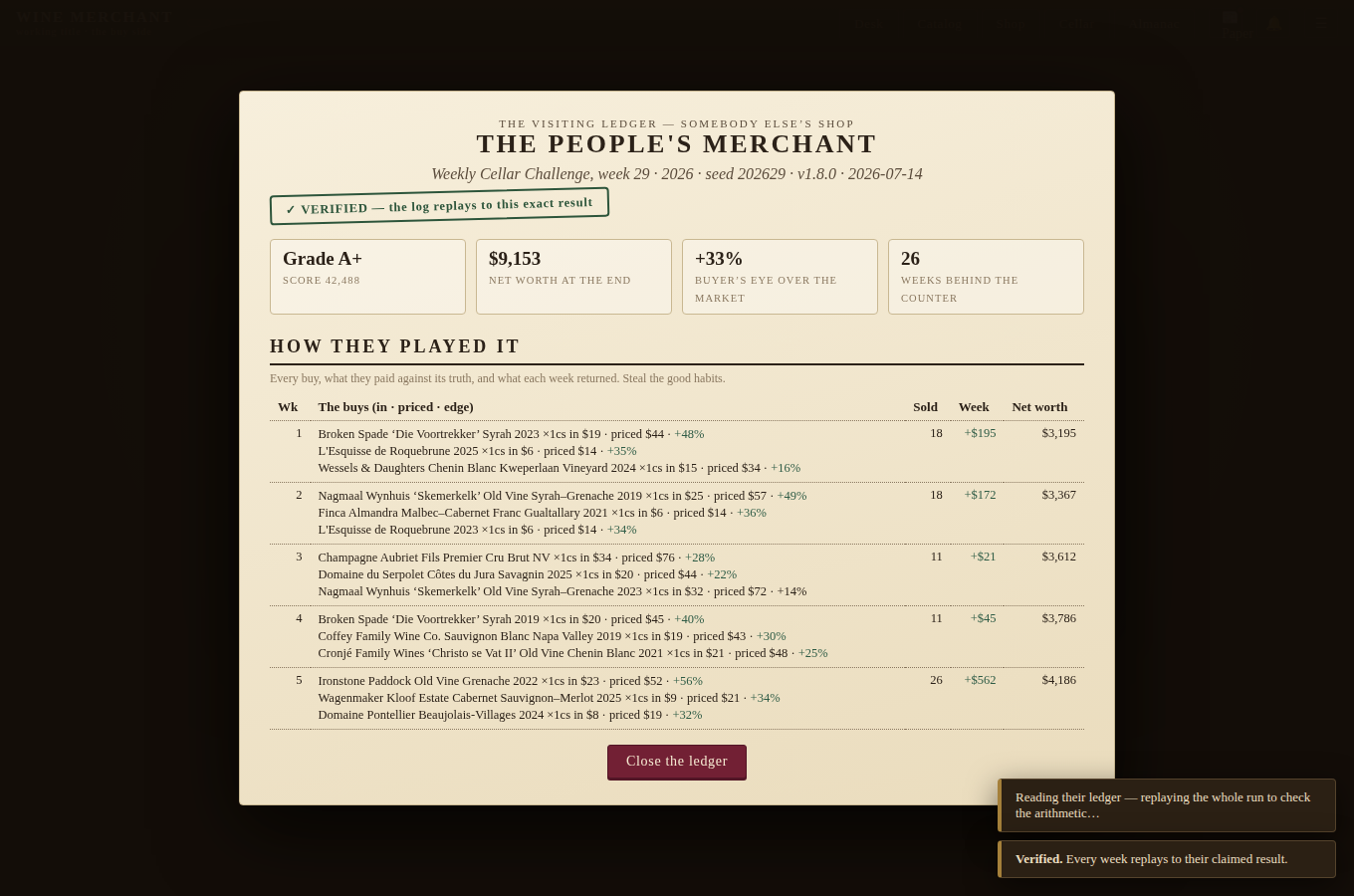
Then the week runs — real customers walk your floor, the till rings or it doesn't — and Sunday's ledger tells you, to the cent, whether you were right. Great buys reveal themselves months later. Mistakes get names you'll remember. "Next time I'll buy more Burgundy" — every merchant, always.
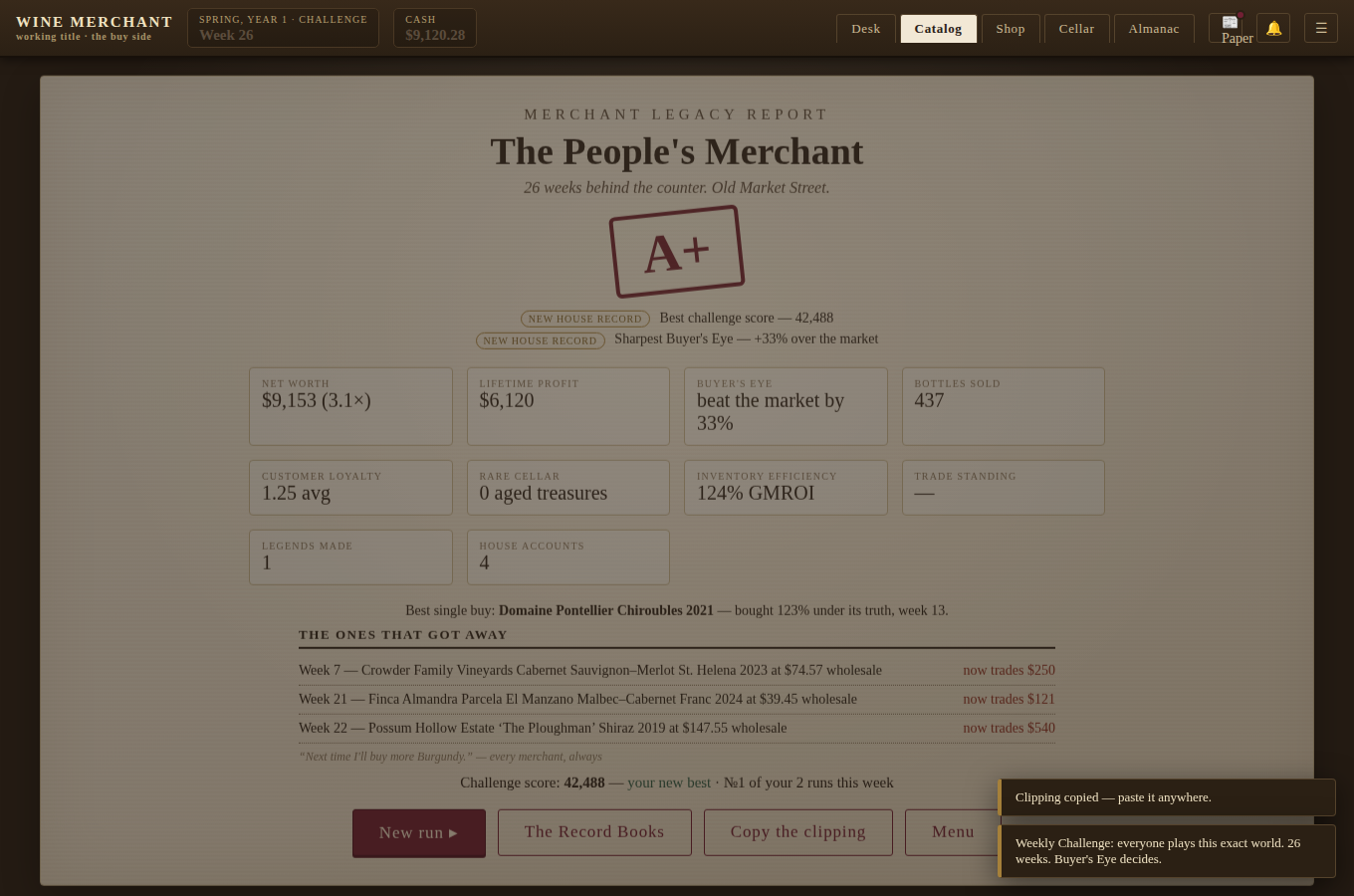
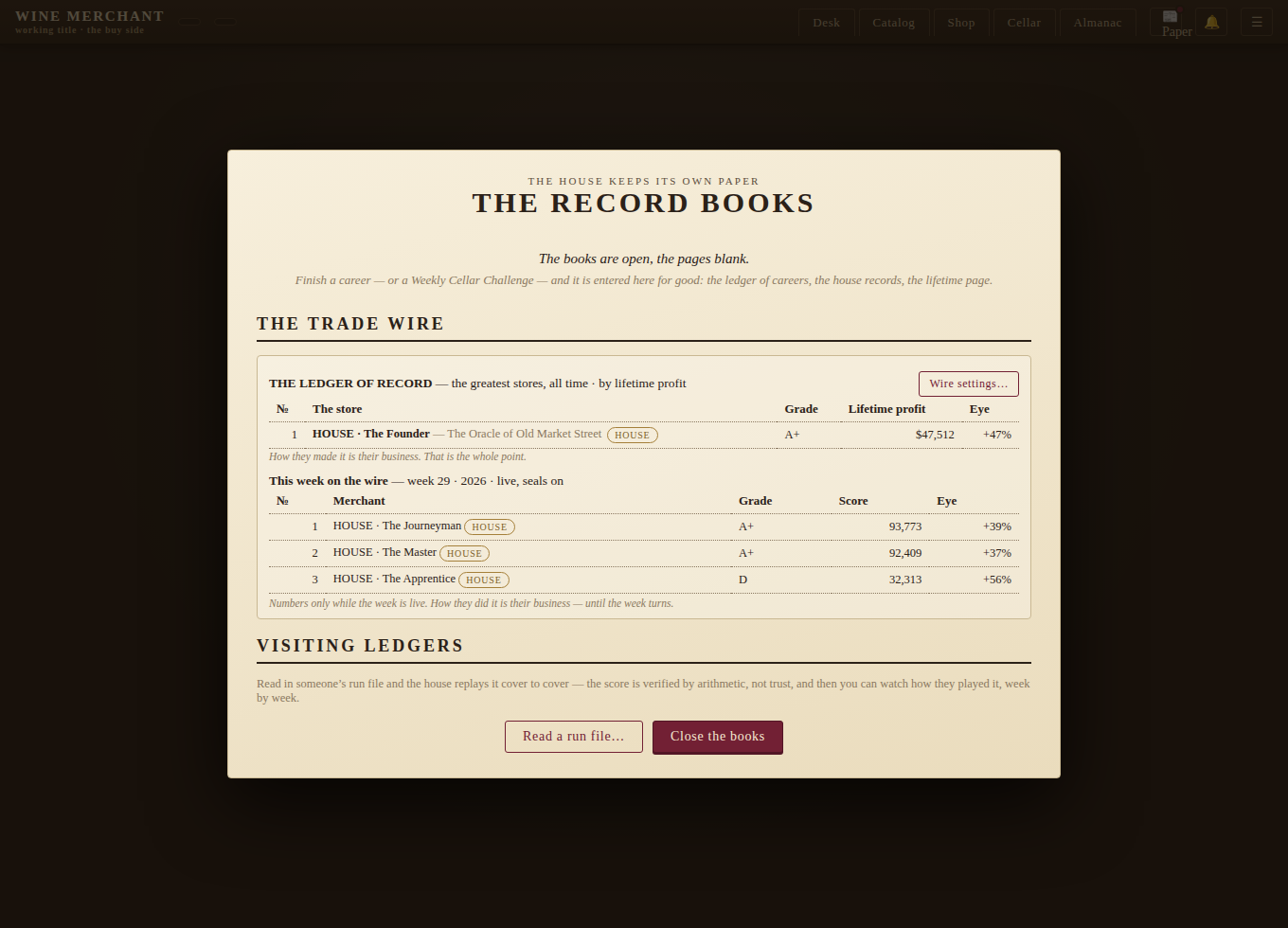
No two careers play alike: a living market of producers, seasons, tariffs, festivals and fads; prestige upgrades you earn rather than buy; rivals with their own books; and an endgame report that grades the one thing this game is actually about — your eye.